
Learn, unlearn, relearn, repeat.


Yesterday’s skills won’t secure tomorrow’s success. The old idea that having qualifications plus doing a bit of CPD is enough is outdated. Today, relevance demands ongoing curiosity and a constant novice mindset. In a world of rapid tech shifts, climate initiatives, and evolving business models, adaptability isn’t optional, it’s mission-critical.
The secret? Learn, unlearn, relearn, repeat.This cycle is the backbone of lifelong learning:
Learn new skills and approaches.
Unlearn outdated habits and assumptions.
Relearn with fresh insights and tools.
Repeat because change never stops.

According to the World Economic Forum ‘Future of Jobs Report’ (2025), 39% of core skills will be disrupted by 2030. Employers now prioritise:
🧠 Analytical thinking (69%)🧠 Resilience, flexibility and agility (67%)🧠 Leadership and social influence (61%)🧠 Creative thinking (57%)🧠Motivation and self-awareness (52%)
“This combination of cognitive, self-efficacy and interpersonal skills within the top five emphasizes the importance ascribed by respondents to having an agile, innovative and collaborative workforce, where both problem-solving abilities and personal resilience are critical for success.” -Future of Jobs Report 2025, World Economic Forum
For ops leaders, this means embedding learning into the DNA of your organisation. Not as an HR initiative, but as a strategic capability.
Why Lifelong Learning Matters Now
Markets and regulations shift faster than traditional training cycles. Waking up to a new compliance rule or AI tool every week is a reality for many organisations. Firms that treat learning as a strategic asset reduce errors, improve client outcomes, and retain talent. It also boosts wellbeing and career resilience. When people see learning linked to meaningful work, they stay engaged.
Knowledge alone isn’t enough. Professional judgement grows through ongoing, mentored, real-world experience. Learning must be woven into daily operations, not confined to courses.
Insights From Thought Leaders In Lifelong Learning
Here are some thought-provoking insights from leading thinkers in the field of lifelong learning:
Tom Vanderbilt – Beginners: Protect novices with safe practice such as mock client calls and interactions, sandbox pilots, and fast feedback loops.
Edward Hess – Learn or Die: Make learning structural; embed it in KPIs, leadership routines, and resource allocation.
Michelle Weise – Long Life Learning: Careers are sequences of learning episodes. Offer modular credentials and flexible pathways.
Danny Iny – Leveraging Learning: Design for speed and scale; tight objectives, rapid feedback, and alignment to business outcomes.
Norman Longworth and W. Keith Davies – Lifelong Learning: Build ecosystems; link employers, educators, and regulators for portable learning.
Takeaway: Protect beginners, embed learning in leadership, enable modular pathways, design for scale, and build ecosystems that make learning portable.
Ideas For Fostering Lifelong Learning In Your Business
Embed lifelong learning into the strategy, culture, and daily practice of your business by making learning a shared, visible, and rewarded norm. Here are some suggestions but we’d love to hear your ideas too.😉
🧭 Make Learning a Strategic Priority
Align learning with business goals: Integrate learning objectives into strategic plans, ensuring they support innovation, resilience, and long-term growth.
Champion learning at the top: When leaders model curiosity and continuous development, it signals that learning is valued at every level.
Make learning visible and rewarded: Reward behaviours, not just outcomes, celebrate publicly.
🧱 Build the Right Infrastructure
Invest in accessible learning platforms: Offer microlearning, on-demand content, and blended learning options that fit into busy schedules.
Create learning pathways: Develop clear, role-specific development tracks that show how learning leads to career progression.
🤝 Foster a Culture of Knowledge Sharing
Encourage peer-to-peer learning: Set up mentoring, shadowing, or internal “lunch and learn” sessions to normalise knowledge exchange.
Recognise and reward learning behaviours: Celebrate those who share insights, complete courses, or mentor others.
Launch mentorship and peer learning programmes with explicit practice goals and public commitments.
Partner with learning institutes, professional bodies and collaborative groups that promote lifelong learning.

🔄 Embed Learning into Daily Operations
Make reflection routine: Use after-action reviews, retrospectives, or “lessons learned” debriefs to turn everyday work into learning opportunities.
Empower experimentation: Create safe-to-fail environments where teams can test new ideas and learn from outcomes.
🌱 Promote a Growth Mindset
Normalise not knowing: Encourage questions, curiosity, and the idea that skills can be developed over time.
Train leaders to coach: Equip managers with coaching skills to support team development and learning agility.
📊 Measure and Adapt
Track learning impact: Use metrics like skill acquisition, internal mobility, and engagement to assess the ROI of learning initiatives.
Iterate based on feedback: Regularly gather input from teams to refine learning offerings and remove barriers.
🗺️Create “Learning Maps”
Create “Learning Maps”, visual guides that link key competencies (e.g., regulatory updates, behavioural finance, communication styles) to learning resources, CPD opportunities, and real-world applications. This reinforces your values of clarity, empowerment, and long-term trust.
👩🔬Design For Practice And Tech Reality
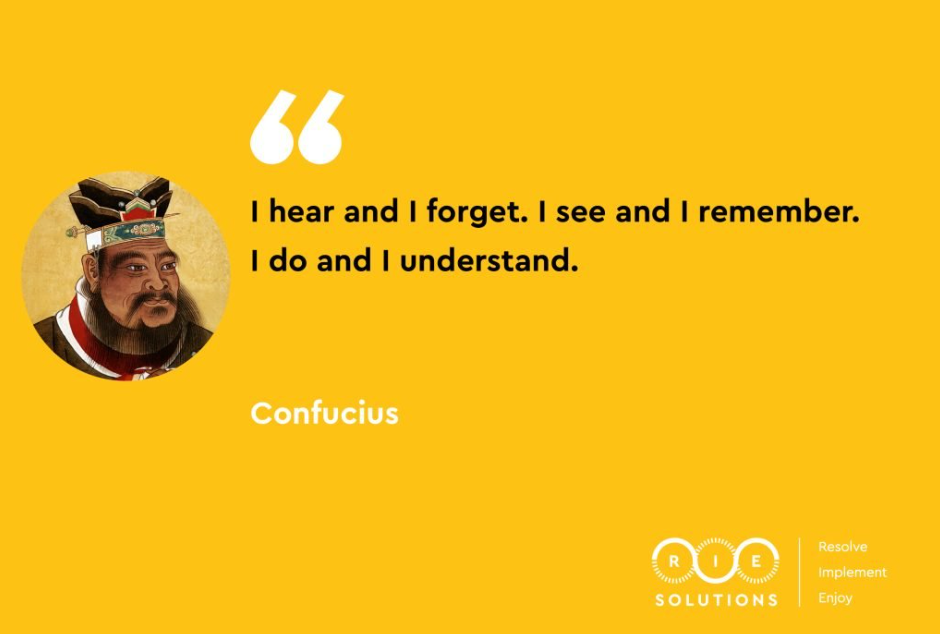
Build short micro-modules plus coached simulations: Run tech pilots in a sandbox before full deployment. Use coached simulations ‘learning by doing’ to practice key competencies (refer to Kolb’s Experiential Learning Theory & Learning Styles)
Bottom Line for Ops Leaders
Lifelong learning isn’t a perk, it’s a performance driver. Embed it into strategy, culture, and daily practice. Make learning visible, rewarded, and aligned to business outcomes. In a world where change is constant, the pattern of learning, unlearning, relearning, and repeating must be the norm!
Question: How much is your business investing in learning and development?
📚 November Reads: Lifelong Learning
📖 Driving organisational success: Strategies for L&D teams (British Council), Corporate English Solutions (2024)
📖 Beginners The Joy and Transformative Power of Lifelong Learning, Tom Vanderbilt (2021)
📖 Learn or Die Using Science to Build a Leading–Edge Learning Organization (Columbia Business School Publishing), Edward D. Hess (2020)
📖 Long Life Learning Preparing for Jobs that Don’t Even Exist Yet, Michelle R. Weise (2021)
📖 Leveraged Learning How the Disruption of Education Helps Lifelong Learners, and Experts with Something to Teach, Danny Iny (2018)
📖 Lifelong Learning Norman Longworth and W. Keith Davies (2017)
WHY CONTINUOUS LEARNING IS CRUCIAL FOR THE FUTURE OF WORK
“…research from Deloitte highlights that 86% of leaders view learning and development as their top challenge…” – David Arnoux, CEO, Growth Tribe


Comments