
Pause with purpose


As 2025 draws to a close, it’s the perfect moment to pause, reflect, and celebrate all that we’ve achieved over the past year. Before we step into the new possibilities of 2026, we invite you to carve out some quiet time this month to look back on the highlights and lessons of 2025, so that you can use these insights to shape clear, purposeful priorities for the year ahead.
🌟 Reflection and why it matters
Throughout history, some of the greatest minds have emphasised the power and value of reflection. Yet, in today’s fast-paced world, contemplation rarely gets the attention it truly deserves. So, here’s why taking time to reflect matters:
Improved decision-making: Leaders who pause to reflect avoid reactive choices and make more thoughtful, strategic decisions that drive real results (rather than simply staying busy without meaningful progress).
Personal growth: Reflection helps us learn from both successes and failures, turning experience into insight, enabling refinement and meaningful growth.
Resilience and adaptability: In fast-changing environments, reflection gives leaders the space to reset, adapt, and reignite their purpose.
Culture building: Reflective leadership nurtures empathy and trust, creating an environment where continuous learning and growth become part of the organisation’s DNA.
Prof. Nien‑hê Hsieh and Harvard Business School describe reflective leadership as a continuous habit that strengthens culture, ethics and accountability. And these concepts aren’t new. Ancient traditions taught structured pause to align action with meaning. Aristotle, Socrates and Marcus Aurelius insisted that deliberate self-examination is essential.
Marcus Aurelius and the Stoics practised a disciplined daily inventory: what went well, what could improve, and what to control tomorrow anchoring reflection as a habit to steady the mind.
Socrates believed that self-examination was the moral duty of life, and Aristotle put reflective thought at the heart of practical wisdom and moral formation.

The evolution of reflection in business
Modern research shows reflective practice improves decision‑making and effectiveness. Like the ancients structured reflection is recommended rather than vague ruminations. Guided prompts, facilitated peer reflection, and scheduled reflective routines produce measurable gains in leadership capability and organisational learning.
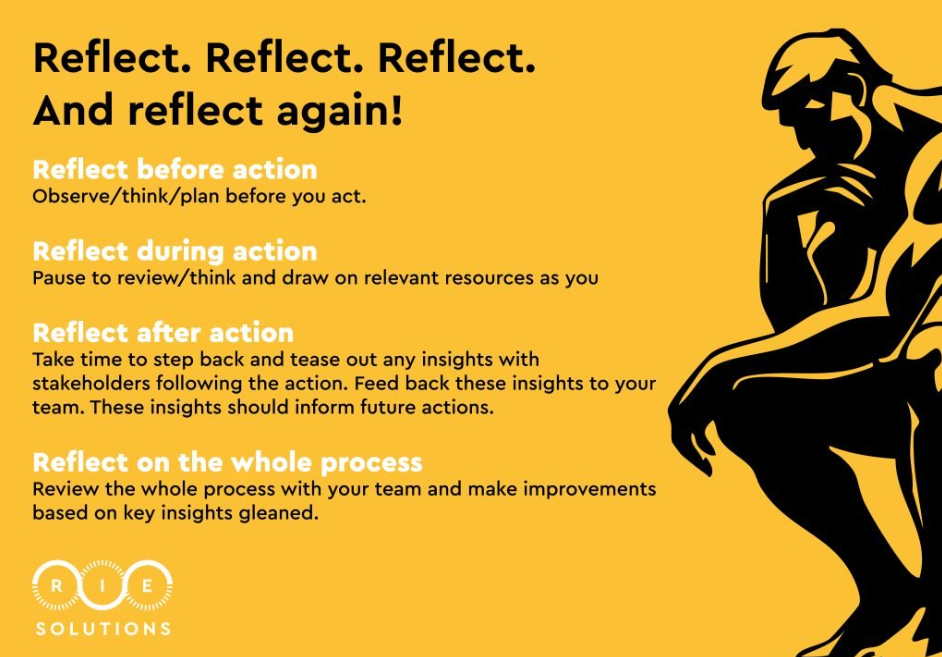
Donald Schön introduced reflection‑in‑action to explain how professionals think while doing: noticing surprises, reframing problems, and adapting in the moment, skills that turn tacit knowledge into better practice. Thompson & Thompson build on Schön by adding reflection‑for‑action, an explicit stage that links insight to planned change so reflection becomes forward‑facing and operational rather than merely retrospective.
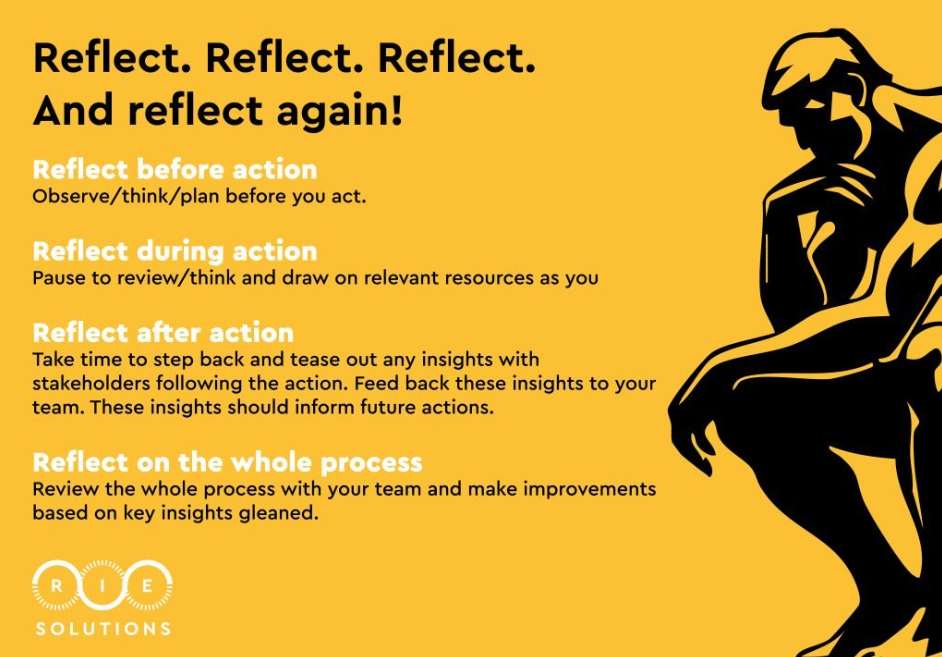
Regardless of the type of reflection you incorporate into your leadership, the evidence is clear that structured reflection is far more productive than vague ruminations. As a leader, embedding short, repeatable reflective rituals into your operations increases the likelihood that insights become measurable changes in behaviour and outcomes.
🔑 Key Lessons for Leaders
Make time for reflection
Even in high-pressure environments, carving out space to pause is essential. Reflection is a discipline, not downtime. Put regular time for reflection in your calendar!
Learn from experience
Every success and setback carries lessons. Reflecting on these moments helps leaders avoid repeating mistakes and replicate wins.
Balance action with pause
Reflection is the “power of pause.” Leaders who balance execution with introspection are more effective in the long-run.
Reset and realign
Reflection allows leaders to step back, reassess priorities, and ensure alignment with long-term goals.
Encourage team reflection
It’s not just personal. Leaders who model reflective practices inspire teams to adopt them, boosting collective performance.
📌 Practical Ways to Apply Reflection
Daily journaling: Capture key decisions, emotions, and lessons.
Structured reviews: Hold regular “after-action reviews” to analyse what worked and what didn’t.
Note: Besides Agile Retrospectives (What worked well? What could be improved? What will the team commit to doing in the next sprint?) the MPC Being Agile webinar (the recording is available to Master Practitioner Club members) introduced Daniel Kahneman’s Premortem idea of asking “What could possibly go wrong?” before embarking on a project.
Mentorship conversations: Use reflection to guide discussions with peers or mentors.
Note: Our RIE Solutions blog on Mentorship misconceptions: Ditching advice for empowerment shares some great insights to build future capability, confidence, and capacity.
Mindful pauses: Build short reflection breaks into meetings or strategy sessions.
Key takeaway: Small, repeatable reflection rituals will deliver measurable leadership gains in 2026.
Here is an annual checklist that you can adapt for your circumstances:
✅ Annual Leadership Reflection Checklist
Pause & Scan
What were the biggest wins this year?
Where did I face setbacks or resistance?
Did I act in line with my values and vision?
Decisions & Impact
Which decisions had the greatest impact (positive or negative)?
Did I gather enough perspectives before acting?
What would I do differently if faced with the same choice again?
Team & Relationships
Did I empower and support my team effectively?
Where did I listen well, and where could I have listened better?
Did I recognise and celebrate team members contributions?
Personal Growth
What did I learn about myself this year?
Did I manage my energy and focus wisely?
Which habits helped me, and which held me back?
Forward Alignment
What are my top priorities for next year?
What should I stop, start, or continue doing?
How will I ensure my actions align with the long-term vision?
✨ Pro Tip
Write down 2–3 bullet point reflections per section. What does this reflection reveal about your patterns, strengths, and growth areas?
Integration (one‑page plan)
Top priority for 2026 (one line): __________
Three supporting actions: __________; __________; __________
Success metric: __________
Weekly ritual to sustain it: __________
Making it stick
Timebox reviews, alternate solo and peer reflection, and anchor rituals (breath, short walk) to reduce reactivity. Start with a 60‑minute business review and a 30‑minute personal review this month, capture outcomes on one page, and share your single priority with a peer for accountability.
Timebox: Remember, short, regular reflection sessions beat marathon reviews.
Mix solo and social: For best results, alternate private journalling with a trusted peer or mentor check‑in.
Anchor with ritual: Get physical. A short breath practice or a walk before you begin reflection reduces reactivity and deepens insight.

Next steps
Think of reflection as an invitation, a short, loving pause that returns you to clearer leadership and a steadier life!
GOT A MEETING, TAKE A WALK
“What you’re doing, right now, at this very moment, is killing you.” – Nilofer Merchant , Co-Founder, The Intangible Labs


Comments