
Embracing The Toyota Way: A Path to Operational Excellence


Have you heard of the Toyota Way? The Japanese Toyota Motor Corporation transformed the global motor manufacturing industry by developing a set of management principles and business practices that emphasise continuous improvement and respect for people revolutionising how cars are built. Over time, numerous manufacturers successfully incorporated the principles of the Toyota Production System (TPS) into their operations, with companies like Boeing exemplifying its effectiveness. Even the notoriously efficient German motor companies BMW, Volkswagen and Mercedes-Benz have implemented various aspects of the TPS. But more recently, businesses beyond manufacturing, such as Tesco in the retail sector, have also embraced TPS, achieving similarly impressive results. So, lately this approach has gained popularity amongst UK financial service firms, including HSBC, Barclays, Lloyds Banking Group and Nationwide Building. These examples demonstrate the versatility and effectiveness of TPS principles across various industries and sectors. By focusing on continuous improvement, waste reduction, and respect for people, organisations can achieve significant operational efficiencies and improved outcomes.
Could turning to Toyota’s way of working improve your business? I really think so!

What are the main principles of The Toyota Way?
The Toyota Way is built on two main pillars: continuous improvement and respect for people, these are supported by 14 principles (I have skipped their beautiful Japanese names, look them up if that’s your thing):
Prioritise adopting a long-term philosophy when making management decisions.
Design process flows that help identify and eliminate inefficiencies. Avoid overproduction and waste. Don’t have people “sitting on their hands”.
Operate demand-initiated “pull systems” with just-in-time production.
Level workloads, enhance efficiencies and remove bottlenecks. Avoid burning up people, processes and resources. Embrace balance and harmony.
Deliver quality, right-first-time. Problems are addressed immediately to ensure quality.
Build consistent, reliable, standardised processes through continuous improvement and employee empowerment.
Use visual control e.g. dashboards and real-time monitoring to monitor performance and identify issues quickly.
Use only reliable, thoroughly tested technology that serves your people and processes. (That’s an interesting one in today’s climate).
Cultivate leaders who thoroughly understand the work, live the philosophy, and teach others.
Develop great teamwork through exceptional people and teams who follow your company’s philosophy.
Nurture long-term relationships with partners and suppliers. Challenge them and help them to improve.
Develop a first-hand understanding of things. Go and see for yourself to thoroughly understand a situation. This encourages hands-on problem-solving and understanding.
Make decisions slowly by consensus, thoroughly considering all options; implement decisions rapidly.
Be a learning organisation through relentless reflection and continuous improvement. Foster a culture of continuous learning and problem-solving.
Adopting these principles makes sense regardless of the size of your business! And while most seem like common sense to me, they are not as simple to get right as it may seem from reading the list. Which of these principles could you apply to enhance efficiency, customer satisfaction, and employee engagement in your business?
Evolution and Recent Developments
The Toyota Way continues to evolve to incorporate new technologies and methodologies. Recent developments include:
Embracing digital transformation. Moving infrastructure to the cloud and adopting data automation tools.
Prioritising sustainability and integrating environmental considerations into Toyota’s long-term philosophy.
Blending human-centred practices with digital tools to drive innovation.
Toyota has been an early adopter of Artificial Intelligence, leading the way and using Generative AI, Machine Learning, Computer Vision and Natural Language Processing to develop:
Autonomous Vehicles (AVs) Powered by AI
Predictive Maintenance Using AI
AI-Enhanced Supply Chain Management
AI-Driven Customer Service and Support
AI-Driven Smart Factories
Comparisons with Other Methodologies:
The Toyota Production System (TPS) is often compared to other management and production methodologies. Here are some key comparisons:
🆚 Lean Manufacturing (Lean)
Similarities: Both focus on eliminating waste, continuous improvement, and enhancing efficiency. The TPS inspired lean manufacturing.
Differences: The TPS is more comprehensive, incorporating a strong cultural component emphasising respect for people and long-term thinking. Lean is often seen as a subset of TPS, focusing more on processes, tools and techniques rather than cultural aspects.
🆚 Six Sigma
Similarities: Both aim to improve quality and efficiency. Both use data-driven approaches to identify and eliminate defects in processes.
Differences: Six Sigma is more focused on statistical analysis and reducing variation, while the TPS emphasises flow, pull systems, and visual management. Six Sigma projects are typically led by certified professionals (Black Belts), whereas TPS encourages a more inclusive, company-wide approach to problem-solving.
🆚 Agile
Similarities: Both promote flexibility, continuous improvement, and customer-centric approaches. Both encourage iterative processes and quick responses to change.
Differences: Agile is primarily used in software development and project management, focusing on short development cycles (sprints) and collaborative teams. The TPS, on the other hand, is rooted in manufacturing and emphasises standardising work and visual control.
Like the German car manufacturers mentioned above, you don’t have to adopt all the Toyota Way principles you can pick and choose where you make changes in your business to optimise your existing processes and people management.
How can you start using The Toyota Production System (TPS) in your business?
Tesco, Barclays and Boeing have successfully implemented the TPS. Implementing the Toyota Way in your company can bring significant benefits, but challenges can arise too. Here are some suggestions on how you can get started:
➡️ Cultural Shift
The Toyota Way probably requires a fundamental change in your organisation’s culture, emphasising continuous improvement and respect for people. This means promoting a culture where everyone is encouraged to identify and solve problems. Leadership must actively promote and model these principles, providing training and support to help the team embrace the new culture. Leaders can find it a challenge to decentralise decision-making.
➡️ Effective Communication
Leaders must clearly explain the benefits of the Toyota Way to the rest of the team, highlighting how it can improve their work environment, reduce inefficiencies, and enhance overall job satisfaction. Use real-life examples and success stories to illustrate these points.
➡️ Employee Involvement
Engaging employees early in the process can help smooth adoption. Explain the benefits of the Toyota Way and involve your team in problem-solving and decision-making. This helps in gaining their buy-in and makes team members feel valued and part of the change.
➡️ Comprehensive Training
Provide thorough training on the principles and practices of the Toyota Way. Ensure that everyone understands how to apply these methods in their daily tasks. Continuous education and support are essential to keep everyone on the same page.
➡️ Address Concerns
Listen to the team’s concerns and address them promptly. Create an open environment where everyone feels comfortable voicing their worries. This helps in building trust and reducing resistance.
➡️ Start Small
Begin with small, low risk, manageable projects to implement the Toyota Way principles. Gradually expand these practices as resources allow. This will help your business manage resource constraints and ensure a smooth transition.
➡️ Continuous Improvement
Establish regular review and feedback mechanisms to keep the focus on continuous improvement. Celebrate the small wins.
➡️ Integration with Existing Systems
Plan the integration of the Toyota Way with your existing systems and processes carefully. Involve cross-functional teams to address potential issues.
➡️ Strong Leadership Commitment
Strong and consistent leadership is vital. Leaders should actively promote and model the Toyota Way principles to inspire and motivate the team to embrace and uphold the new way of working.

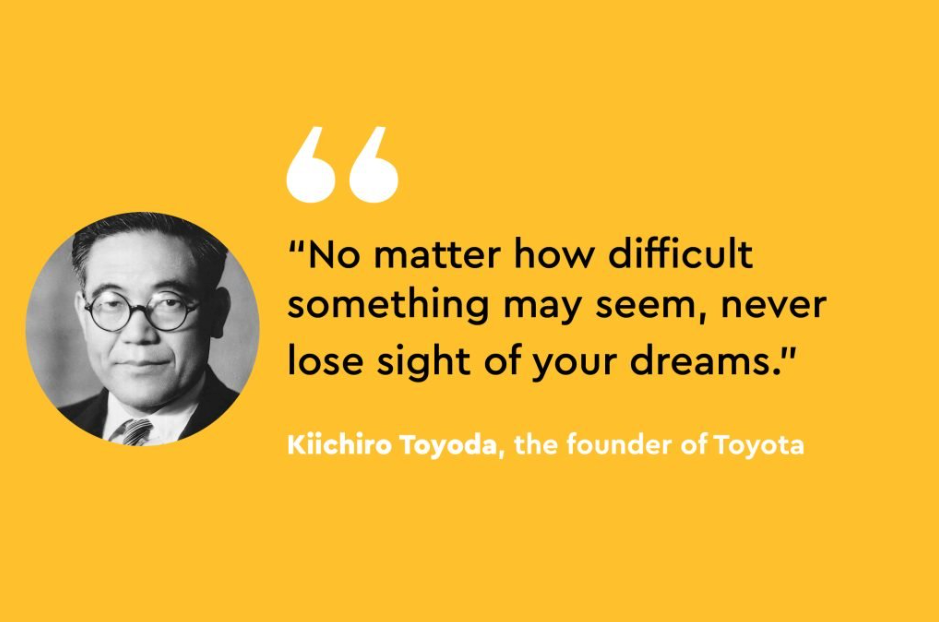
Embracing Change and the Five Main Principles of Toyoda (this isn’t a typo 😉 – Toyoda is the founder of Toyota)
Toyota embraces change to enhance its operations, products, and customer experience while staying true to the principles of the Toyota Way of continuous improvement (Kaizen) and respect for people. Perhaps this is why Toyota is leading the global motor manufacturing industry into a future of smarter, safer, and more efficient mobility.
Could your business, like Toyota, Tesco, Barclays and Boeing benefit from adopting the Toyota Way?
I’ll leave you with the Five Main Principles of Toyoda, first introduced on October 30, 1935 and which I love personally! These principles remain a cornerstone of the company’s employee guidelines to this day.
Always be faithful to your duties, thereby contributing to the Company and to the overall good.
Always be studious and creative, striving to stay ahead of the times.
Always be practical and avoid frivolousness.
Always strive to build a homelike atmosphere at work that is warm and friendly.
Always have respect for spiritual matters, and remember to be grateful at all times.
We hope you like this approach and would love you to share with us the aspect of the Toyota Way that interests you the most! 🚀
Toyota Way Principle #1 Philosophy | Long-Term Systems Thinking
“Toyota’s strong sense of mission and commitment to its customers, employees, and society is the foundation for all the other principles and the missing ingredient in most companies that try to emulate Toyota.”


Comments